

ARE YOU A TRAITOR BRAND OR A FAITHFUL BRAND?
Ally Waring
06/11/2025
BBH's very own Ally Waring deep dives into what it means to be a Traitor or Faithful brand.
Everyone’s favourite murder mystery turned multi-million pound celebrity endorsement machine, The Traitors, is sharpening its knives for another killer finale.
In this twisty social experiment, our velvet-cloaked villains quietly “murder” the Faithfuls while pretending to play nice — all for a prize pot that, in the celebrity version, goes to charity.
With over 12 million set to watch, Celebrity Traitors will be one of the biggest TV events of 2025. But before we clutch our cloaks and swear allegiance, have we really been paying attention?
What really makes an “Excellent Traitor”?
How can we tell if someone is, in fact, a Faithful?
And (let’s make it a little more Labs, shall we?) which side does your brand fall on?
A Roundtable Moment
The Traitors hits a bunch of high notes we just can’t resist.
It’s the biggest unscripted show in the UK, outpacing every reality, competition and docu-series out there.
True crime (the highest-grossing global entertainment category) meets everyone’s favourite camp detective obsession — wrapped in cashmere cloaks and deceit.
It’s the BBC’s masterstroke: ditching on-demand chaos for good old-fashioned appointment TV, reviving water-cooler culture one murder at a time.
Claudia Winkleman. (Say less.)
But ultimately, The Traitors is about something we all do every day...
Playing games.
Let The Games Begin
“The essence of games is not the move itself, but the concealed motivation behind it.”
— Eric Berne, The Games People Play
The Traitors is pure psychological theatre. We watch as the players bluff, lie, cry and betray their best mate over breakfast. A mirror held up to our most basic instincts: belonging, suspicion, survival. A hangover from our hunter gatherer ancestors. They tells us: isolation = death.
And so… we keep playing…
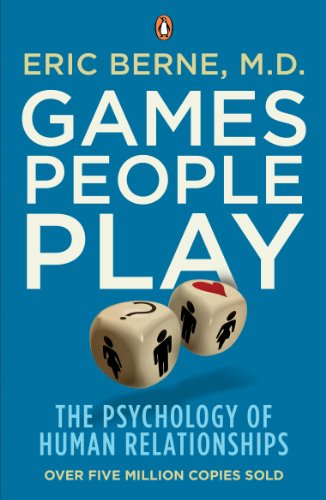
Enter Eric Berne. His 1964 classic ‘The Games People Play’ explored how humans fall into unconscious patterns of manipulation — little social “games” that help us feel powerful, validated, or safe.
The Traitors is basically a Berne case study in cloaks.
And brands are no stranger to these games either.
Traitor Behaviour
Think of the person who gives “helpful feedback” no one asked for.
Berne called this one “I’m Only Trying to Help You” — a game where the “helper” feels superior while dodging their own insecurities. A textbook Traitor move.
And let’s be honest, Adland knows this game well. It’s called Selling.
Or, if you prefer, “creative persuasion.” 👀
Traitor brands play it too — leaning on fear, guilt, and FOMO instead of genuine customer needs.
Duolingo’s relentless owl shames you into lessons. Fitness and detox brands whisper that your body is betraying you. Flight upsells dangle comfort while you endure seven hours in economy.
Booking sites shout “Only 2 rooms left!” to trigger panic, while fast-fashion and beauty drops tempt you to buy before time runs out.
Any brand trading on anxiety, scarcity, or social pressure is playing a Berne game — giving audiences the illusion of control, but never true resolution.
But it hurts them too: sales may spike in the short term, but they can kiss long-term return goodbye. Traitor brands, take note.
But can we sell without scheming?
Or are we all destined to keep playing until the final Banishing Ceremony?
100% Faithful
Berne’s thinking suggests an alternative: don’t be a Traitor, but a Faithful brand.
But how to get there? First, brands must consider their own ‘ego states’. The three personalities we play at one time or another:
Parent: Think Claudia calling out Faithfuls for another disastrous banishment. Nurturing, yes. But a little controlling.
Adult: Picture Stephen Fry, turtleneck on, re-reading Hamlet. Balanced, calm.
Child: Imagine Alan Carr, sweating and giggling through chaos, delightfully emotional but prone to panic when the torchlight dims.
‘Games’ kick off when these ego states collide. Cue: outrage, superiority, zero resolution. Classic Traitor chaos.
Instead, Berne encourages turning destructive games into healthy engagement - in Faithful brands’ case, through creative reframing.
Take KFC. When they ran out of chicken, they didn’t blame — they played the FCK game, matching customers’ Child frustration with an Adult-level solution.
Or our own work, Burger King’s ‘Bundles of Joy’ campaign: guilt and impulsive “I shouldn’t” (Child) became “I deserve this” (Adult). A delicious reframe — no manipulation.
A Faithful brand doesn’t trade on scare-tactics or social pressure (quick sale? yes. long-term relationship? no).
They build trust, turning one-off buyers into lifelong returners. A transparent roundtable where everyone wins — no poison chalices, no midnight murders.
So Faithful brands, leave the games on the telly at 9pm.
As this round ends, pour a glass of fizzy rosé.
Fix your fringe.
Be a Faithful brand.
And put the games to bed.
TLDR; The Traitors isn’t just TV drama — it’s a mirror for how people (and brands) play games to survive. Manipulation (aka “selling”) exploits these games, but real connection happens when brands give customers what they truly need. Brands should stay Faithful, and rise above the games to win their prize money. *closes coffin lid*